Why did a trade that looked cheap suddenly feel expensive? The answer usually sits in two places most traders glance past: spread and commission.
A small spread can look attractive at first glance, but that number is only part of the bill.
A broker may charge through the spread, through a fixed commission, or through both, and those choices change the true cost of every entry and exit.
Some raw spread accounts advertise 0.0 to 0.1 pip spreads and then add a fixed commission, according to BrokerChooser.
That is why reading broker pricing the wrong way gets expensive fast.
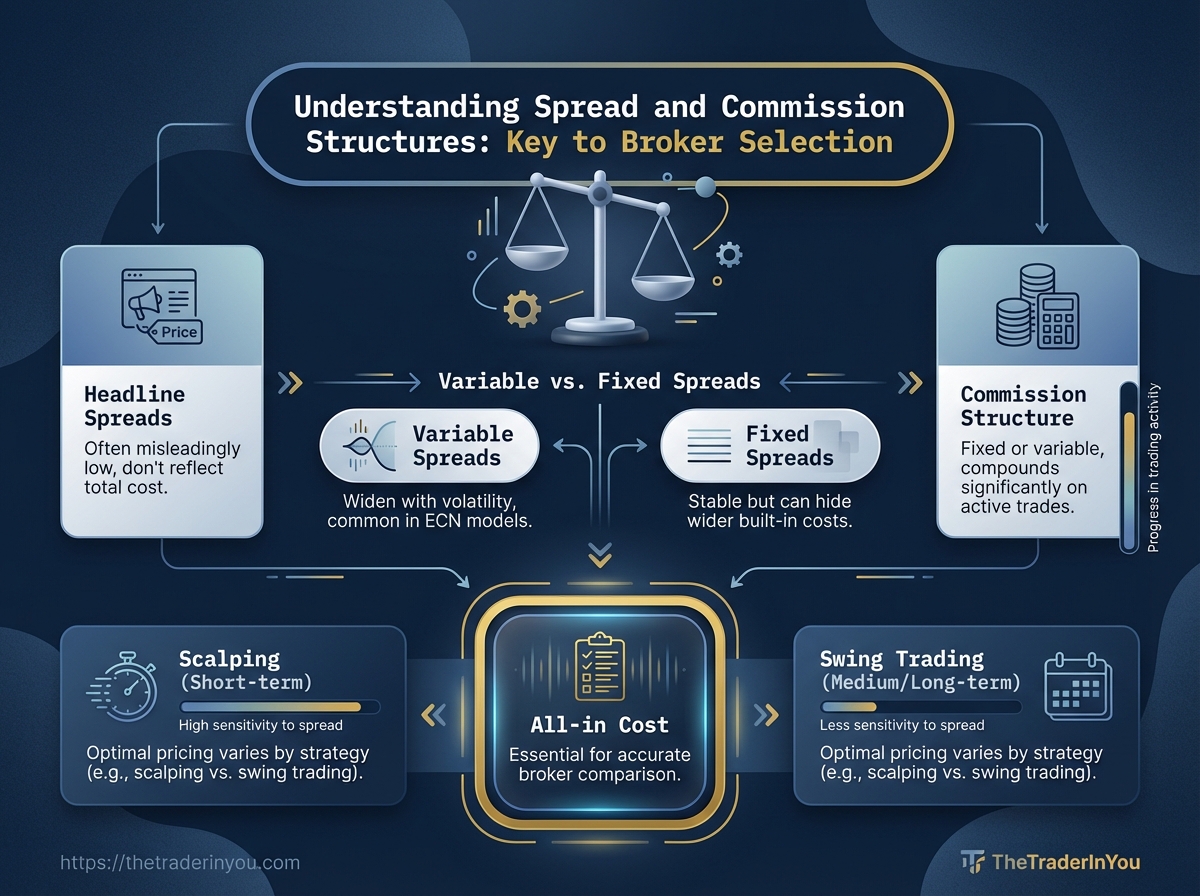
In active markets, variable spreads can widen when volatility spikes, while fixed spreads can hide a wider built-in cost.
Research from Vantage Markets notes that ECN brokers always use variable spreads, while STP brokers can offer fixed spreads.
Once Forex broker spreads and commission structures are understood properly, broker comparison stops being a guessing game.
The real question becomes how broker fees affect trading in your own style, because the cheapest-looking account is not always the cheapest one after a full round trip.
Quick Answer: Compare brokers by running a real all-in cost calculation for the way you trade. Use this template for your next few trades: 1) Pick the exact inputs you’ll actually use: same pair, same session hours (e.g., London/NY), and the same account type. 2) Estimate round-trip execution cost (per lot): – Spread cost = (average spread in pips) × (pip value per lot) – Commission cost = (commission per side) × 2 – Execution friction buffer = a realistic slippage/quote-requote allowance for your order type 3) Add holding/operational costs only if they apply: – Swap for overnight exposure – Any inactivity fees – Currency conversion charges for deposit/withdraw/profit settlement ECN-style setups usually show tighter quotes plus commission, while STP/other models may package costs differently. Either way, what matters is the normalized all-in cost you consistently experience—not the broker’s best-case advertised minimum spread.
Why broker pricing matters more than headline spreads
A broker can show a number that looks great—then the round trip exposes the real bill.
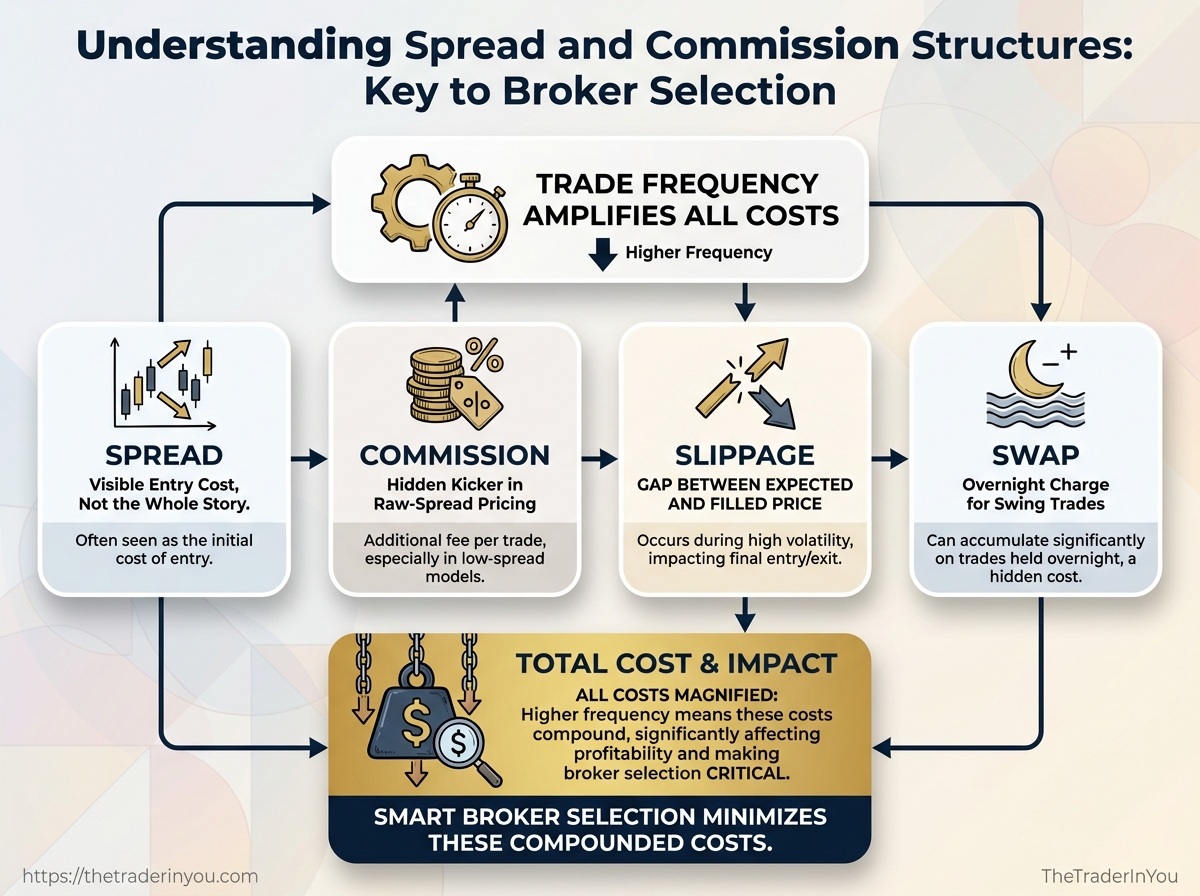
That happens because brokers can charge through different layers: spread, a per-trade commission, execution friction (fill quality/slippage), and holding costs (swap/inactivity/fees).
So when you’re comparing brokers, don’t stop at the advertised spread. Compare all-in cost for the trading behavior you actually use.
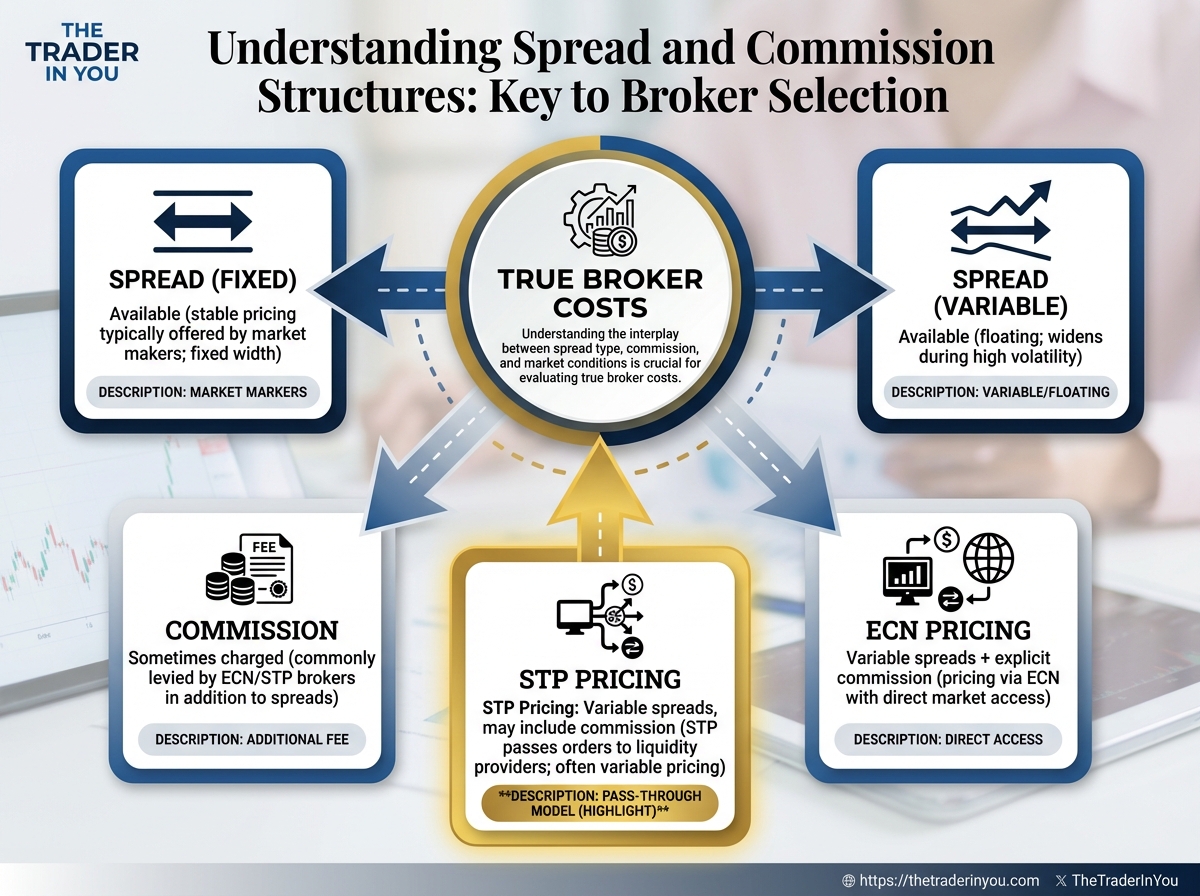
ECN-style models are commonly built around tighter quoted spreads with separate commission, while STP setups often package costs differently (sometimes with wider spreads and/or different commission handling). The practical point is the same: the fee model changes the cost profile across entries and exits.
What “all-in cost” typically includes
- Spread: The visible entry/exit friction (headline pips).
- Commission: Often small per side, but it compounds fast for active strategies.
- Slippage: The gap between expected and filled price, which can spike during volatility.
- Swap: Overnight carry that quietly changes expectancy for swing/position traders.
The pricing structure also affects strategy choice.
If your edge relies on harvesting small moves (scalping/intraday), even a “cheap-looking” spread can become a slow drain once commission and execution friction are included.
If you hold longer (swing/position), a wider quoted spread can be acceptable—provided swap and other holding-related debits don’t overpower your edge.
When pricing is evaluated through the lens of your trade frequency, spread-and-commission comparison stops being guesswork.
The real question becomes: what kind of cost profile does this broker produce for the way you trade?
Core components of broker pricing
Ever looked at a broker quote and wondered why the same pair feels cheap at one firm and pricey at another?
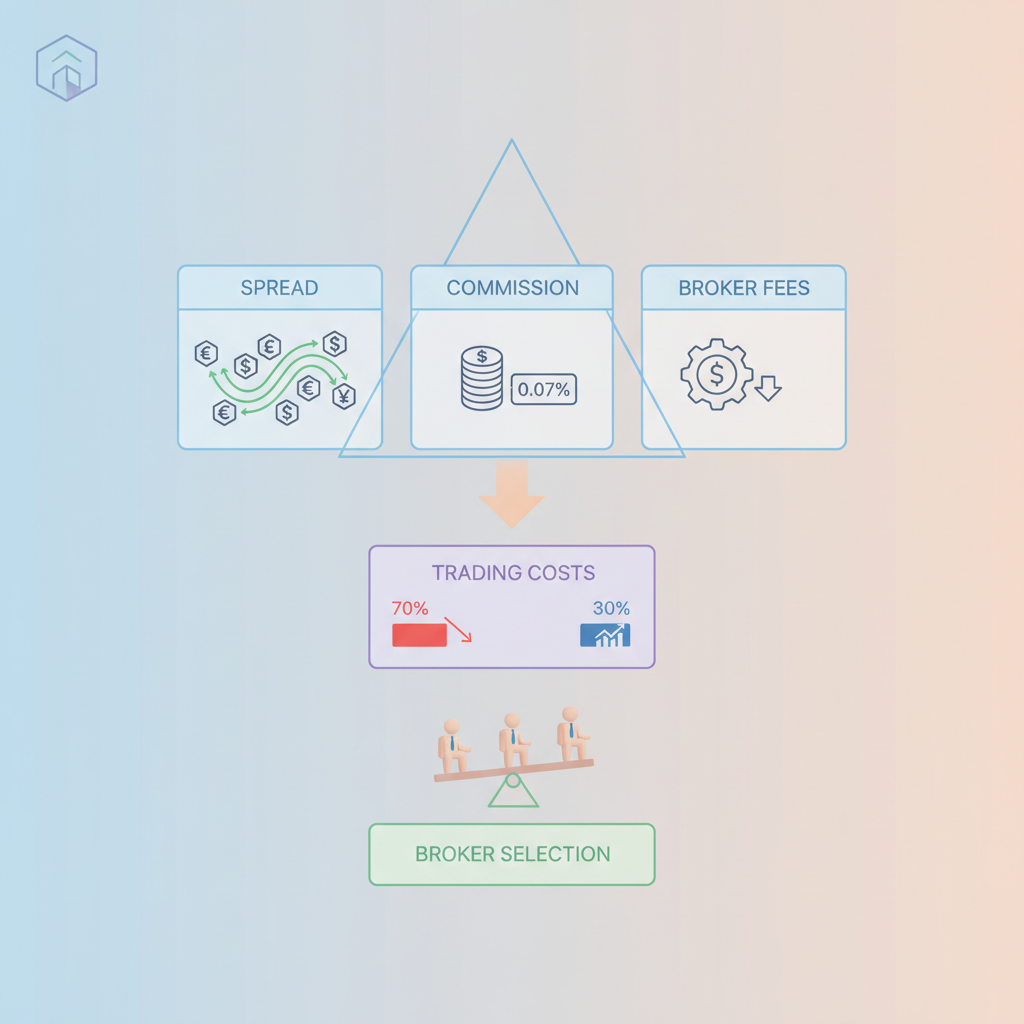
The answer usually sits in three moving parts: the spread, any commission, and whether the price is fixed or variable.
The spread is the gap between the bid and ask price, and brokers usually quote it in pips or fractions of a pip.
A EUR/USD quote of 1.0842/1.0844, for example, carries a 0.2 pip spread.
Fixed and variable spreads behave very differently in live trading.
Fixed spreads stay steady, which makes cost planning easier, while variable spreads move with market conditions and can widen during busy news periods, as explained in CompareBroker’s guide to fixed vs variable spread pricing and Tradingpedia’s overview of STP brokers.
ECN-style pricing usually sits in the variable camp too; Vantage Markets’ ECN vs STP comparison notes that ECN brokers use variable spreads, while STP models can be fixed or variable depending on the setup.
Commission changes the picture again.
On raw spread or ECN-style accounts, the spread may be very tight, but the broker adds a separate fee on each side of the trade.
BrokerChooser’s 2026 low-spread broker guide describes raw spread accounts as often showing 0.0 to 0.1 pip spreads plus a fixed commission, which is why the printed spread alone never tells the full story.
How spread and commission models compare
| Pricing model | Typical spread | Commission | Best fit | Main trade-off |
|---|---|---|---|---|
| Standard spread account | Wider, built into the quote | None | Casual traders and simple cost tracking | Easy to read, but the all-in cost can be higher |
| Raw spread account | Often 0.0 to 0.1 pip |
Fixed per lot or per side | Scalpers and active traders | Low spread looks attractive, but the commission still adds up |
| Commission-based account | Very tight or raw | Charged separately | High-frequency traders | Costs depend more on trade size and turnover |
| Fixed spread account | Stays constant | Usually none | Traders who want predictable pricing | Stability can come with a wider quoted spread |
That is why broker fees deserve a full-cost check, not a quick glance at the headline spread.
The useful habit is plain: look at the spread, the commission, and how the pair behaves when the market gets lively.
Once those three pieces are clear, broker pricing stops being mysterious and starts being easy to compare.
How spread and commission affect real trade outcomes
Why does a trade that looks fine on the chart end up with a weaker result?
Because the market charges on both sides of the ticket.
Every entry and exit includes spread friction plus any per-trade commission the account applies. On strategies with small targets or frequent turnover, that “round-trip tax” can consume a meaningful share of expectancy.
A quick sanity check:
- A 0.1-lot EUR/USD position is sensitive to costs measured in pips (even small per-trade fees move the needle).
- If your average target is only a few pips, then the spread + commission portion can remove the margin you were relying on.
Sample cost comparisons (EUR/USD, representative numbers)
| Trade style | Average spread cost | Commission cost | Estimated total round-trip cost | Impact on profitability |
|---|---|---|---|---|
| Scalping, 1 standard lot | $2.00 | $7.00 | $9.00 | A 5-pip target has limited room—costs take a large bite. |
| Intraday trading, 0.5 lot | $2.00 | $3.50 | $5.50 | More room than scalping, but repeated entries still add up fast. |
| Swing trading, 0.5 lot | $4.00 | $3.50 | $7.50 | Bigger targets absorb entry/exit costs better, but poor exits still hurt. |
| Position trading, 1 standard lot | $10.00 | $7.00 | $17.00 | Costs may be small versus a 200-pip move, but repeated scaling can make them visible. |
A practical habit: compare broker costs against your average target size and trade frequency, not against a marketing banner.
If costs remove the first few pips, your strategy effectively starts the trade at a negative position.
In other words, pricing structure directly shapes how much edge you need before the strategy can survive real execution.
Hidden cost factors that change the real price of execution
Have you ever seen a broker offer a fee schedule that looks almost too perfect?
Then the trade fills—and the receipt tells a different story.
Beyond headline spread and commission, the biggest “net cost” surprises usually come from execution friction and time-based/operational fees.
Execution friction: slippage, requotes, and speed
A market order can fill worse than expected (or be delayed) when the broker can’t match the quote fast enough.This matters most when:
- volatility jumps,
- liquidity thins,
- your order size is large relative to available depth.
In fast markets, “tight spread” can stop being tight because order routing and fill quality become the cost.
Quiet costs: swap, inactivity, and conversion
Even if your entries/exits are perfect, costs can still accumulate through:- Swap: Overnight carry that changes expectancy for swing/position trades.
- Inactivity fees: Monthly/periodic charges if you pause the account.
- Currency conversion charges: Extra friction when depositing/withdrawing/profiting in one currency while trading in another.
Why this breaks “fee schedule” thinking
A clean fee sheet doesn’t mean clean results, because costs land in different places:- at entry/exit (spread + commission),
- during the hold (swap/inactivity/operational debits),
- at settlement/conversion (currency handling).
A smart habit is to price the whole trade cycle—from order send to account-level debits—before deciding whether a broker is truly cheap.
If a broker’s pricing looks good but execution is inconsistent or holding costs are punitive, the net result can be worse than a broker with a higher advertised spread.
How to compare brokers using pricing data
Two brokers can quote the same EUR/USD spread and still leave very different bills.
That happens because the visible spread is only one slice of the cost picture.
The cleaner way to compare brokers is to line up the same pair, the same trading session, and the same account type.
ECN pricing is usually variable, while STP accounts can be fixed or variable, so a promotional average tells you very little on its own (Vantage Markets on ECN vs STP account behavior, TradingPedia’s 2026 STP broker overview).
Variable spreads also tend to widen when markets get jumpy, which is why a quiet-morning quote can look better than the one you actually get during London or New York open (CompareBroker’s fixed vs variable spread guide).
That is why the real comparison starts before you open the account.
Build a total cost checklist, then test each broker against live quotes instead of brochure averages.
Raw spread accounts can show 0.0 to 0.1 pip spreads and still charge a fixed commission, which is a very different deal from a standard spread-only account (BrokerChooser’s 2026 lowest-spread broker review).
Pricing checklist for broker comparisons
| Evaluation item | What to verify | Why it matters |
|---|---|---|
| Average spread on major pairs | Check the live EUR/USD, GBP/USD, and USD/JPY spread during the session you trade most. |
Average numbers can hide the exact hours when pricing gets worse. |
| Commission per lot | Confirm the commission on raw-spread or ECN-style accounts, including whether it is charged per side. | A tight spread can still be expensive once the ticket fee is added. |
| Execution policy | Identify whether the account is ECN, STP, or market maker, and whether spreads are fixed or variable. | Broker type shapes how prices are routed and how often they change. |
| Swap rates | Compare overnight long and short swap on the exact pair you hold past the close. | Holding costs can quietly erase a low-spread advantage. |
| Conversion fees | Check whether deposits, withdrawals, or profits are converted into another currency. | Currency conversion creates extra cost even when trading looks cheap. |
| Inactivity charges | Read the dormant-account policy before funding the account. | A paused account can still leak money through monthly fees. |
Once you line up live quotes, commission structures, and holding costs on the same pair and session, the real differences jump out fast.
That habit saves more money than chasing headline spreads ever will.
It also makes broker marketing a lot less impressive, which is honestly a good thing.
Choosing the right pricing model for your trading style
A spread-only account feels calm because the bill is visible before the trade even opens.
That simplicity matters when you trade less often, hold positions longer, or just want fewer moving parts in the cost structure.
Commission-based pricing works differently.
The spread is usually tighter, sometimes near raw market pricing, and the broker charges a separate fee on top.
That setup often suits active traders who care about entry precision more than pricing simplicity, especially since raw spread accounts typically pair very tight spreads with a fixed commission and ECN-style models are built around variable pricing rather than neat fixed quotes.
When spread-only accounts make sense
Spread-only pricing can be a practical fit for newer traders who want clean cost visibility and fewer line items to track.
It also works well for swing traders and position traders, because their edge usually comes from holding time and market direction, not from shaving a fraction of a pip off every entry.
That said, the trade-off is easy to miss.
Fixed or spread-only accounts can look friendlier on paper, but they often carry wider spreads to cover the broker’s fee model, and fixed spreads tend to be less flexible during fast markets, according to compare broker fixed versus variable spread guidance.
When commission-based pricing is the better fit
Scalpers and high-frequency intraday traders usually care about the all-in cost per round trip more than the simplicity of the ticket.
For them, a tight raw spread plus commission can be cleaner than paying a wider spread every time they enter and exit.
That pattern shows up clearly in broker account design.
Vantage’s ECN vs STP guide notes that ECN accounts use variable spreads, while STP models may offer fixed spreads, and Mishov Markets’ broker types overview also highlights that variable spreads can widen during volatile periods.
If your strategy depends on frequent entries, that distinction matters a lot.
Matching account type to strategy
A simple way to decide is to match the account to your trade frequency and holding time.
- Few trades, longer holds: Spread-only or fixed-spread pricing often feels easier to manage.
- Many trades, tight exits: Commission-based pricing usually gives more useful execution economics.
- News-driven trading: Variable-spread models can work, but only if you accept sudden widening.
- Strategy testing: Keep the account type consistent so your results reflect the same cost structure.
For professional traders, the real question is not which model sounds cheaper.
It is which model fits the way the strategy actually makes money.
Our own market analysis tools at The Trader In You are built with that same mindset: cost structure should match the trade plan, not fight it.
Why can a broker that quotes ultra-low spreads sometimes cost more than a broker quoting a higher number?
Because your results are determined by what happens in your account—not what the marketing spread suggests.
Mistake 1: Treating the best tick like your actual execution price
With variable pricing, spreads can be excellent briefly and then widen when liquidity thins.What to do instead:
- Pull your own spread observations for the exact hours you trade (e.g., London/NY overlap).
- Use those observed values (or your broker’s historical tick data if available) rather than the single minimum.
Mistake 2: Ignoring execution quality signals that are already visible in your fills
A clean fee schedule doesn’t help if fills consistently deviate from expectations.Execution friction shows up as:
- worse-than-expected entry/exit (slippage)
- order delays/partial fills
- quote-requote behavior depending on order type and market conditions
What to do instead:
- For a small sample of trades, record: requested vs filled price, time-to-fill (if shown), and whether you saw re-quotes/retcodes.
- Convert that slippage into a per-trade cost (pips or account currency) so you can compare brokers apples-to-apples.
Mistake 3: Assuming ‘low commission’ (or ‘no commission’) guarantees low round-trip cost
Low advertised spreads often come with per-lot/per-side fees elsewhere, and the effect compounds with trade frequency.What to do instead:
- Compute a round-trip cost from your broker’s real inputs: spread (from your session), commission per side, and your observed/estimated execution friction.
- Then compare that computed number against your strategy’s typical target/stop distance.
A cleaner way to judge broker pricing in practice
Do a micro-audit using your own execution data: 1) Choose two brokers and one consistent setup (pair, session, order type, lot sizing). 2) Place/record a small batch of trades. 3) Compare realized net cost per round trip from recorded fills (including swap/fees if relevant).If the cheaper broker only looks cheap on the sales page—but costs more once you measure fills—then it’s the wrong choice for your trading plan.
Where this article fits in the broker selection topic cluster
A broker can look cheap and still be a poor fit.
That happens when Forex broker spreads look attractive, but the rest of the setup does not hold up under real trading conditions.
This section sits in the cluster as the bridge between price and judgment.
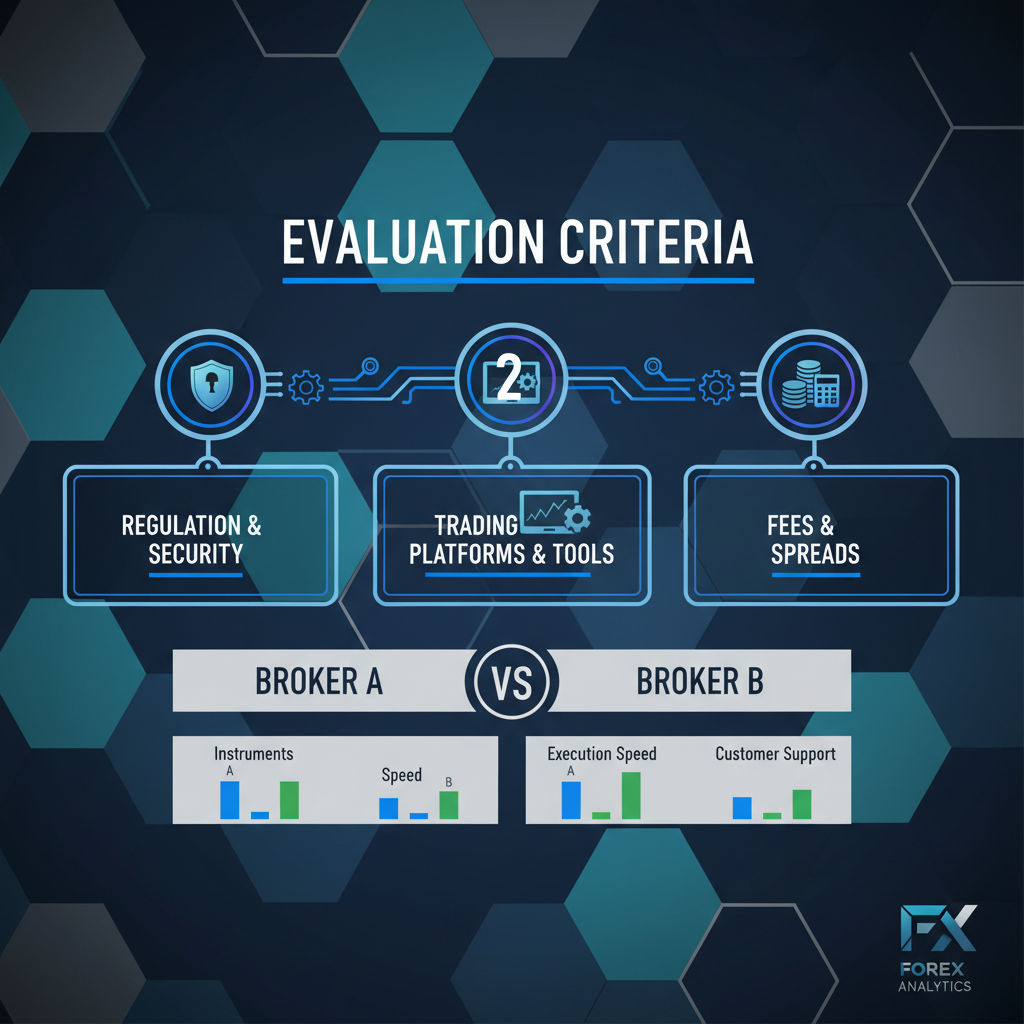
It connects commission structures and fee analysis to the other things that matter just as much: regulation, platform quality, and execution behavior.
Broker pricing is one piece of the puzzle, not the whole picture.
That matters because traders often ask the wrong first question.
Instead of asking only, “How broker fees affect trading,” the better question is, “What kind of trading experience do those fees buy me?” ECN and STP models can route orders differently, and that changes both cost patterns and execution style, as explained in Vantage Markets’ ECN vs STP comparison and Mishov Markets’ broker type guide.
- Regulation comes first: A tight price means little if the broker’s legal setup is weak or unclear. Licensing, client fund handling, and complaint paths are the real guardrails.
- Platform quality changes the cost of mistakes: Slow charts, poor order tools, or clunky ticket handling can turn a fair-fee broker into an annoying one fast.
- Execution decides whether pricing is real: A low advertised cost means less when orders slip badly, fills are inconsistent, or volatility changes the actual trade result.
- Broker type gives pricing context: ECN-style accounts usually pair rawer pricing with commissions, while STP and market makers may show more packaged pricing, as noted in HW Online’s ECN and STP comparison and CompareBroker’s fixed vs variable spread guide.
- Use pricing as one filter, not the filter: A broker should pass the fee test, then the regulation test, then the platform and execution test.
That is the real place of pricing analysis in a broker review framework.
It narrows the field, but it should never make the final call alone.
When all three layers line up, the broker starts looking worth your time.
Conclusion
A tight headline spread is just the entry point.
To pick a broker you can actually trade with, validate the whole trade cycle: (1) spread + (2) commissions, then (3) what you realistically get on fills (slippage/requotes/latency), and finally (4) any swap or operational debits that apply to your holding and settlement habits.
The most practical next step isn’t another pricing theory—it’s a short cost audit that you can reproduce. Compare two brokers using the same pair, the same session timing, the same order type, and the same lot sizing, and then decide using the broker that produces the best repeatable net cost for your strategy (after recorded filled prices, commission, and any applicable swap/fees).
Once your results line up across multiple attempts, you’ll know your broker selection is driven by execution reality—not by marketing-style promo metrics.

Follow Joshua for daily forex tips on X: @thetraderinyou or connect with him on LinkedIn: Joshua Okapes.
- Understanding Spread and Commission Structures: Key to Broker Selection - April 27, 2026
- Comparing Forex Brokers: A Detailed Guide to Evaluation Criteria - April 24, 2026
- The Impact of Global Economic Indicators on Forex Trading Decisions - April 22, 2026