A tight forex spread can look impressive—until the trade gets executed at the wrong time.
Choosing a broker isn’t a matter of which ad sounds best. It’s about how the broker behaves when you actually place orders, manage risk, and deal with account-level terms.
In 2026 comparisons of leading brokers, traders consistently ended up prioritizing cost-to-trade, platform fit, and trust signals—not marketing claims—according to sources like InvestingLive.
So the real question becomes: which broker features you can verify quickly, and which ones can quietly change your outcomes (fills, pricing consistency, margin behavior, and withdrawal experience).
In this guide, we break down five broker features that matter in live trading: regulation and client fund protection, trading costs and pricing transparency, platform quality and order execution, market access and account flexibility, and support/research/tools.
By the end, you’ll have a simple way to rank brokers against each other before opening an account.
Quick Answer: Choose a forex broker by verifying three things before you fund: 1) Regulation + client-fund protection: confirm the exact regulated entity and match it to the regulator register and client-money terms. 2) True cost-to-trade: calculate your typical round-trip cost using spread + commission (if any) + swaps/overnight financing. 3) Execution quality: evaluate fill reliability, slippage patterns, and how orders behave during fast volatility (e.g., requotes/rejections and stop handling). Then confirm platform fit for your workflow (order-entry speed, chart/trade controls, automation reliability) and test support response on the issues that matter to you (withdrawals, margin alerts, and account/order handling).
A broker can make the same strategy look brilliant—or completely broken.
Marketing usually sells the version of trading that happens in screenshots: tight spreads, fast fills, and smooth platforms.
Live trading is where the difference shows up. Slippage, requotes, stop-handling quirks, and lag during volatility can turn a “good” entry into a bad one.
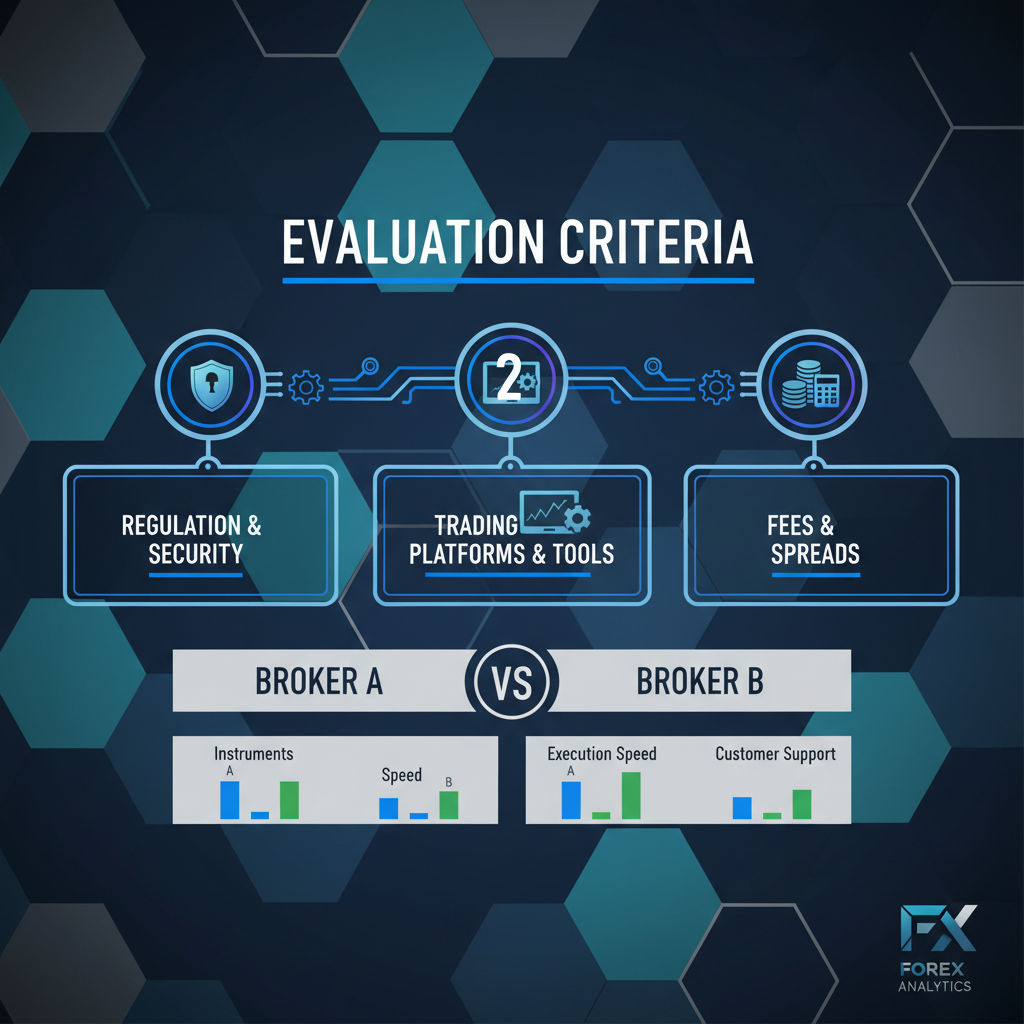
That’s why a serious broker comparison shouldn’t stop at what’s promised. It should measure how the broker handles orders, risk, and trading friction over repeated real sessions—not just on a calm demo day.
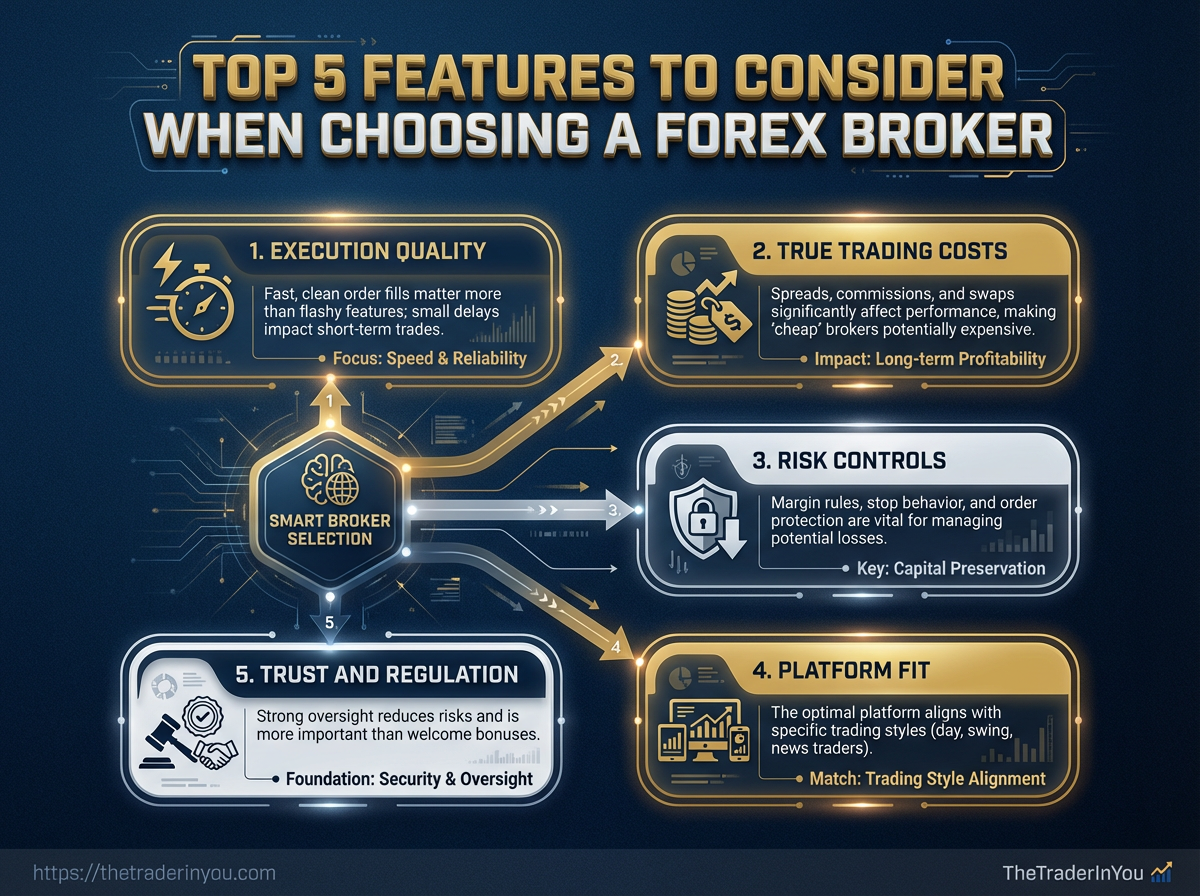
Here are the five categories that consistently separate solid brokers from disappointing ones:
- Execution quality: How reliably orders are filled, modified, and protected when price moves quickly.
- True trading costs: Total cost across spread/commission/swaps and the fees that only matter once you’re trading.
- Risk controls: Margin behavior, stop/close handling, and protections that affect drawdowns.
- Platform fit: Whether the platform supports your workflow (charting, order control, automation) without instability.
- Trust and oversight: Clear legal responsibility and client money protection—not bonuses or branding.
The best brokers feel “uneventful” in use: you trade the plan. The weak ones show up repeatedly—every week—in your fills, costs, and account-level friction.
1. Regulation and Client Fund Protection
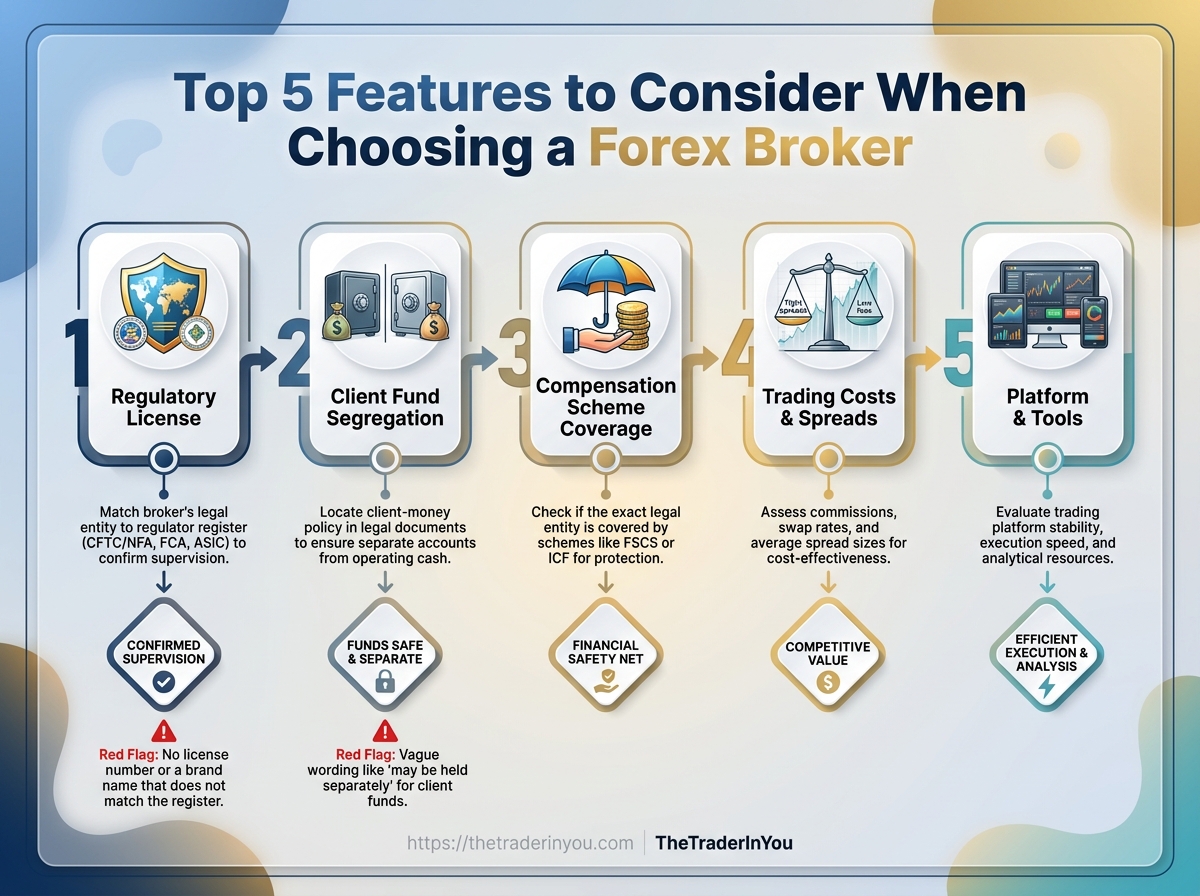
A broker can look polished and still hide the entity that actually holds your account.
That is why regulation matters before platform features, bonuses, or tight spreads ever enter the conversation.
The stronger names in oversight tend to be the ones that publish registers, enforce client-money rules, and make complaints traceable.
That is the standard behind the 5 Best US Forex Brokers of 2026 guide and the Forex Broker Risk Management 2026 compliance blueprint, which both treat visibility as a trust signal, not a marketing line.
The cleaner brokers make this easy to check.
The messier ones bury the legal name, soften the risk language, or leave the account holder guessing about who is actually responsible if something goes wrong.
What to verify before funding the account
The legal entity, risk disclosure, and account agreement should say the same thing, not three different versions of it.
That is where weak disclosure shows up fast.
If the website is slick but the regulator register, client-money page, and legal docs do not line up, pause before sending a cent.
A clean legal trail is boring, and boring is exactly what you want when real money is on the line.
2. Trading Costs and Pricing Transparency
A broker can advertise a zero-commission account and still end up costing more once the spread widens.
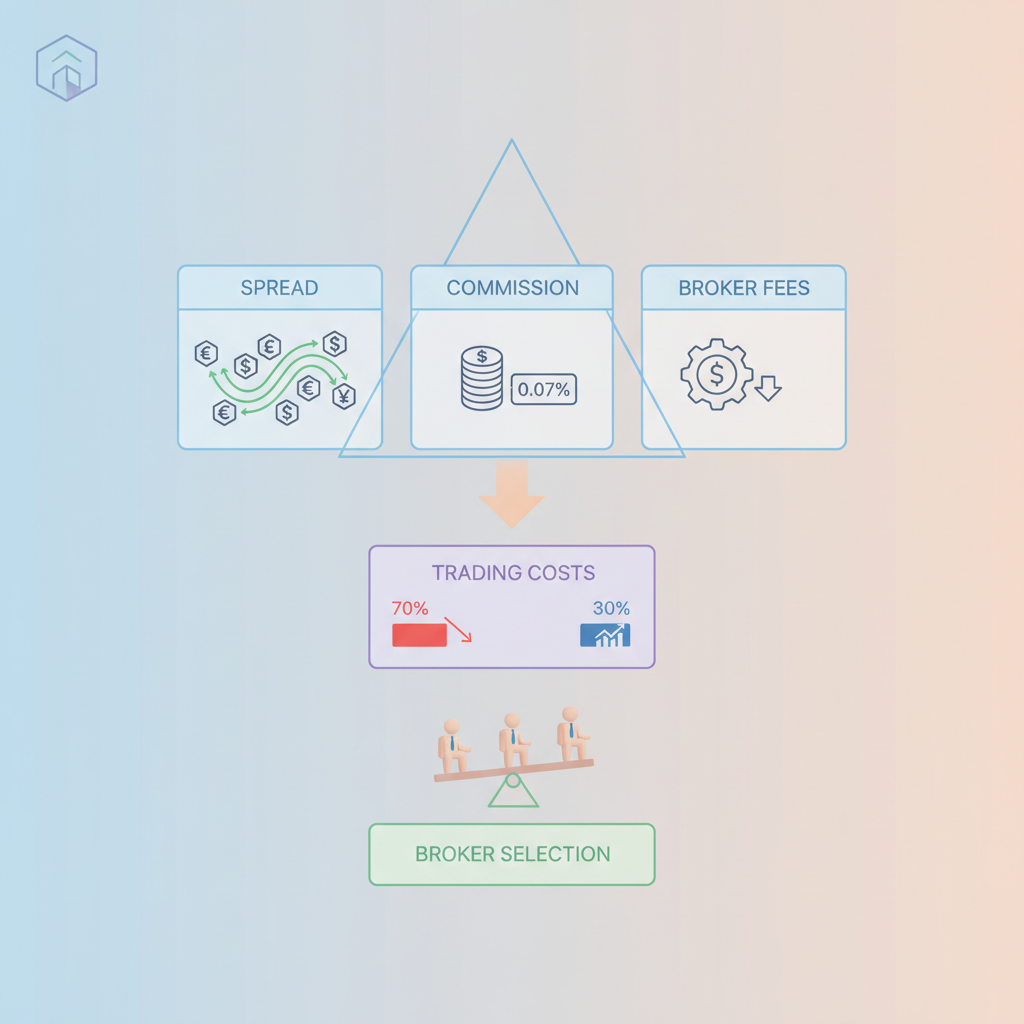
That is why the real bill lives in several places at once: spread, commission, swap, and the smaller fees that only show up after you fund or hold the account.
A solid Forex broker comparison should treat pricing as a package, not a headline.
Recent 2026 broker guides still put cost to trade near the top of the list, right alongside execution quality and platform fit in a 2026 forex broker comparison focused on cost to trade and best forex trading platforms in 2026.
That matters because the cheapest-looking setup is not always the lowest-cost choice.
A tight spread can be offset by a commission-heavy structure, and overnight holds can get expensive fast if swaps are painful.
Broker-selection guides also keep reminding traders to read the fee schedule closely, especially for spreads, commissions, and account rules in this top forex broker guide on spreads and commissions.
A practical comparison starts with the same trade size across every account type.
- Round-trip cost: Add spread plus commission for one full trade.
- Swap exposure: Check overnight charges for both long and short positions.
- Hidden extras: Look for inactivity, withdrawal, conversion, and data-feed fees.
- Account fit: Compare standard, raw, and commission-based accounts separately.
- Real-world use: Test the pairs or indices you trade most, not the marketing favorites.
The cleanest test is simple.
Compare the total cost of your most common trade, then repeat it for the account you would actually use.
A broker that looks cheap on a brochure can become expensive once your style includes frequent entries, overnight holds, or larger position sizes.
That is the part traders miss most often.
The best choice is the broker whose pricing matches the way the trade is actually held, not the one with the prettiest headline spread.
3. Platform Quality and Order Execution
A platform that freezes during a fast move is not a minor annoyance.
It can turn a planned entry into a chase, and a clean exit into a worse fill.
Traders usually notice platform quality only when the market gets loud, which is exactly when weak infrastructure shows its teeth.
Stable platforms should handle order entry, chart updates, and position changes without lag.
In a Forex broker comparison, the practical tests are simple: does the ticket load fast, do stops update instantly, and can you modify or close a trade during volatility without the screen stalling? 2026 platform roundups keep putting execution quality and platform fit near the top of the list, alongside tools and analytics, because those features shape real trading outcomes rather than just the sales page gloss (Best Forex Trading Platforms 2026, Best Forex Brokers in 2026: Detailed Comparison, 5 Best US Forex Brokers of 2026).
Platform features matter most when they save decisions.
Multi-timeframe charts, price alerts, one-click trading, and order controls like stop-loss, take-profit, and trailing stops help traders react without fumbling through menus.
Automation matters too, because a broker’s platform should handle scripts, expert advisors, or other rule-based tools without dropping connection or desyncing open positions.
Execution quality says a lot about the plumbing behind the scene.
Requotes, repeated slippage, and rejected orders during ordinary market hours often point to weak routing, overloaded servers, or poor liquidity handling.
That is why execution speed keeps showing up in broker reviews, especially where VPS support and platform testing are discussed (Top 16 Forex Brokers Reviewed (2026), Forex Broker Risk Management 2026).
- Test order entry speed. A good platform responds instantly in calm markets, not just when the market is sleepy.
- Check advanced order controls. Clean handling of partial closes, trailing stops, and pending orders matters more than flashy charts.
- Watch live execution patterns. Requotes and odd fills in normal conditions are a red flag, not bad luck.
- Compare desktop and mobile behavior. A broker can look polished on one device and clumsy on another.
A slick interface is nice.
Consistent fills matter more.
The brokers worth serious attention are the ones that stay steady when price gets messy.
4. Market Access, Instruments, and Account Flexibility
A trader who wants EUR/JPY, gold CFDs, and one account for stocks, indices, and currencies learns fast that the broker’s menu shapes the whole game.
If the instrument is missing, the strategy is dead before it starts.
That is why features of Forex brokers are not just about pricing or platform polish.
The available pairs, CFD range, and account setup decide whether a day trader, swing trader, or multi-asset trader can actually build the book they want.
Market access also changes by region.
In the U.S., forex broker choices are narrower because of local rules, while other regions often allow more product variety, higher leverage, and broader CFD access, as noted in the 5 Best US Forex Brokers of 2026 guide and the Best Forex Brokers in 2026: Detailed Comparison.
Instrument range decides what you can trade
A broker offering 70 currency pairs is not automatically better than one offering 20.
The real question is whether it covers the pairs and markets that fit your plan.
For example, a swing trader may only need major pairs and a few metals.
A multi-asset trader may care more about indices, commodities, and share CFDs than a huge forex list.
- Currency pairs: Check majors, minors, and the exotics you actually trade.
- CFDs: Make sure the broker offers the asset classes you need, especially if you trade metals, indices, or single stocks.
- Account structures: Some brokers split retail, professional, swap-free, or demo accounts in ways that affect access and costs.
Leverage, margin, and local rules matter more than hype
A headline about 1000:1 leverage sounds exciting until margin calls start chewing through equity.
In practice, leverage limits depend on region, entity, and product type, and that is where many traders get caught out.
The Forex Broker Risk Management 2026 | Strategies & Tools guide stresses how margin rules and exposure controls shape real trading conditions.
For U.S. traders, the 5 Best US Forex Brokers of 2026 page is a reminder that regulation can sharply limit what is available.
Account features that fit the trader
Active traders usually care about fast switching, deep order history, and tight account control.
Swing traders tend to value swap terms, position sizing tools, and the ability to hold longer without account friction.
Multi-asset traders need clean segregation between asset classes and enough platform room to manage them without chaos.
A good Forex broker comparison should cover these items:
- Product access: pairs, CFDs, and regional availability.
- Leverage rules: maximum leverage, margin closeout levels, and negative balance protection.
- Account flexibility: base currencies, sub-accounts, swap-free options, and demo access.
- Trading conditions: minimum trade size, overnight financing, and whether all instruments sit under one login.
The brokers that win here are the ones that match the trader’s actual style, not the ones with the flashiest marketing.
That fit matters every single day.
5. Support, Research, and Trading Tools
A broker’s support desk stops being a nice extra the moment something breaks at the wrong time.
A delayed withdrawal, a platform lockout, or a margin alert that arrives too late can turn a routine trade into a messy recovery job.
That is why support quality sits in the same bucket as pricing and execution when choosing a Forex broker.
Independent broker reviews keep circling back to the same filters: clear support, useful research, and tools that actually help decision-making, not just fill space in a menu.
See the 5 Best US Forex Brokers of 2026 guide, the Best Forex Trading Platforms 2026 comparison, and the Forex Broker Risk Management 2026 toolkit.
The strongest broker research hubs usually do three things well.
They explain market context, they surface risk in plain language, and they help you test an idea before money is on the line.
That matters more than flashy charts or a dozen indicators you will never touch.
- Support speed with real answers: Live chat is fine, but useful support can explain order types, funding delays, and platform errors without copy-and-paste replies.
- Research that changes decisions: Daily commentary, calendar tools, and asset notes are worth more than recycled headlines.
- Risk tools that are easy to use: Margin alerts, position calculators, and exposure summaries should be obvious, not buried three menus deep.
- Education that matches skill level: Good brokers teach beginners without talking down to them, and they give experienced traders something sharper than generic primers.
When support becomes a trading issue
If support cannot resolve account access, verification, or withdrawal problems quickly, it is no longer a customer-service complaint.
It becomes a trading risk, because time, access, and capital are all tied together.
How to judge extra tools
A promotional tool says, “Look at all this stuff.” A useful tool saves time or improves judgment.
During a Forex broker comparison, that difference shows up fast: one broker gives a clean market calendar and exposure view, while another buries the same feature under marketing fluff.
We also pay attention to whether the research is updated often and written by people who understand the product.
A sparse content library with big promises is usually a sign to keep walking.
The best extra tools feel boring in the best way.
They show up when needed, answer real questions, and stay out of the way the rest of the time.
How to Rank Brokers Against Each Other Before Opening an Account
A good broker scorecard is boring on purpose.
It strips out the slick branding and forces every account onto the same page.
Give each feature a simple 1-5 score, then multiply it by the weight that matches your style.
That keeps the comparison honest, especially when one broker looks great on paper but feels clumsy in real use.
Account size changes the math too.
A smaller account usually feels pricing, fees, and margin limits faster, while a larger account can afford to care more about depth, stability, and product fit.
That lines up with how ForexBrokers.com’s 2026 U.S.-regulated broker guide and InvestingLive’s 2026 forex broker comparison frame broker choice: trust, cost, and platform fit carry the most weight.
A simple scoring grid
| Feature | Weight for active traders | Weight for swing traders | What to score | Notes |
|---|---|---|---|---|
| Regulation | 20% | 25% | Entity strength, client money rules, complaint history | Put the regulated entity first, not the homepage branding. |
| Pricing | 20% | 20% | Spread, commission, swap, withdrawal and inactivity fees | Small accounts usually feel this most. |
| Execution | 30% | 15% | Fill speed, slippage, rejection rate, order types | Active traders should test the live platform, not the demo. |
| Market access | 15% | 25% | Instruments, session coverage, shorting, CFDs or spot access | Swing traders often need broader overnight choice. |
| Support and tools | 15% | 15% | Hours, response time, research, alerts, watchlists | Score the tools you will use weekly, not the fancy extras. |
A day trader with a small balance may score execution twice as hard as market access.
A swing trader holding positions for days may flip that priority.
The same logic shows up in MenthorQ’s 2026 forex trading platforms review, which compares execution quality, tools, and analytics alongside pricing and trust signals.
Different traders, different weights.
Same discipline.
Three mistakes distort almost every broker comparison.
- Comparing every broker with the same weights: A scalper and a long-term trader do not need the same scorecard.
- Letting the demo account set the tone: Demo fills can feel smooth while live trading tells a different story.
- Scoring features you will not use: A dozen research widgets mean little if you only place two trades a week.
A clean comparison removes noise fast.
Once the weights match the trader, the bad fits usually show themselves in minutes.
The Broker That Looks Cheap on Paper
A broker’s headline pricing is only the entry point. What matters is what you actually get once orders execute—through execution behavior, the full cost-to-trade, and the protections that govern what happens in fast markets.
Use the five feature groups from this guide to drive your shortlist: regulation and client fund protection, trading costs and pricing transparency, platform quality and order execution, market access and account flexibility, and support/research/tools.
Start with a short shortlist (three brokers is usually enough), then compare only what changes your trades in practice. If the regulated entity is unclear, fee drivers are hard to verify, or you see inconsistent live execution patterns, narrow the list further. Use the scoring approach in this guide to weight each feature by your trading style (active vs. swing, small vs.
larger account) and pick the broker whose documented conditions and real-world behavior match how you trade—not the one with the prettiest marketing quote.
Quick decision checks: 1) Can you confirm the regulated entity and client-money terms for the exact account you’ll open? 2) Does your typical trade’s total cost (spread/commission/swaps plus real account fees) match your plan? 3) Do live execution patterns look consistent with your order type and volatility windows? 4) Do the instruments and leverage/margin rules actually fit your region and strategy?
5) Can support and the tools you’ll use weekly resolve issues fast and clearly?
Do that, and the “cheap on paper” brokers stop looking like bargains.

Follow Joshua for daily forex tips on X: @thetraderinyou or connect with him on LinkedIn: Joshua Okapes.
- Top 5 Features to Consider When Choosing a Forex Broker - May 1, 2026
- Ultimate Resource on the Psychology of Trading for Forex Success - May 1, 2026
- Understanding Regulation: Why Broker Compliance Matters - April 29, 2026