
Regret Theory: A Psychological Perspective on Forex Trading Mistakes
Regret theory underscores the complex interplay between regret, prediction, and decision-making strategies, particularly in bull markets and market crashes.
Regret theory underscores the complex interplay between regret, prediction, and decision-making strategies, particularly in bull markets and market crashes.

The non-farm payroll (NFP) report, released by the Bureau of Labor Statistics, is a critical economic indicator for the United States.

Traders often use economic indicators like CPI in forex trading as part of their strategies. However, trading Forex against CPI data requires careful planning and execution. It’s vital to avoid having an open position immediately before a CPI announcement as Forex spreads could widen significantly right before and after the report.

“Market Manipulation,” in simpler terms, means the market outsmarts you at your strategy. It’s a game where 20% of the players excel remarkably well.

Market manipulation refers to actions taken by influential players in the market, such as large banks or financial institutions, to distort the market’s natural flow artificially.

Many traders find themselves in this precarious position, but there’s one crucial skill that can make all the difference: risk management.

When applied to forex trading, the Chaos Theory suggests that the forex market, despite appearing chaotic, follows specific patterns that can be identified and utilized for trading.

Successful Forex traders have walked the path you are treading and have overcome numerous challenges to achieve their financial goals.
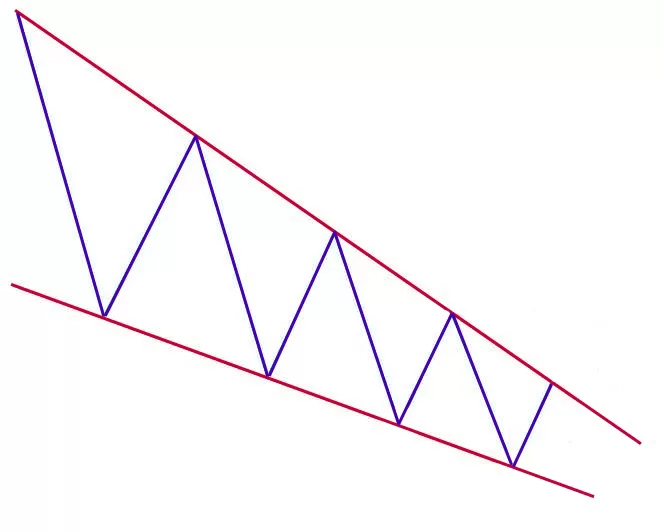
The falling wedge pattern is characterized by gradually narrowing the price range between the two trend lines.
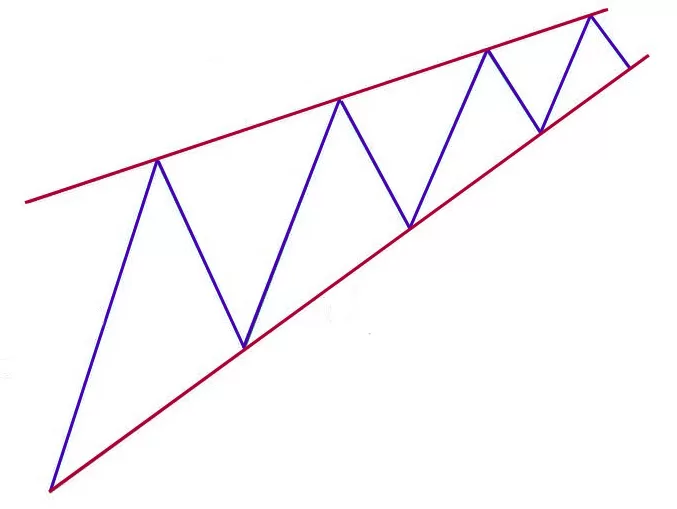
he rising wedge pattern is a bearish chart formation after an uptrend. It is characterized by two converging trendlines, with both the support and resistance trendlines sloping upwards. However, the slope of the support line is usually steeper than that of the resistance line, leading to a convergence of the two lines over time.